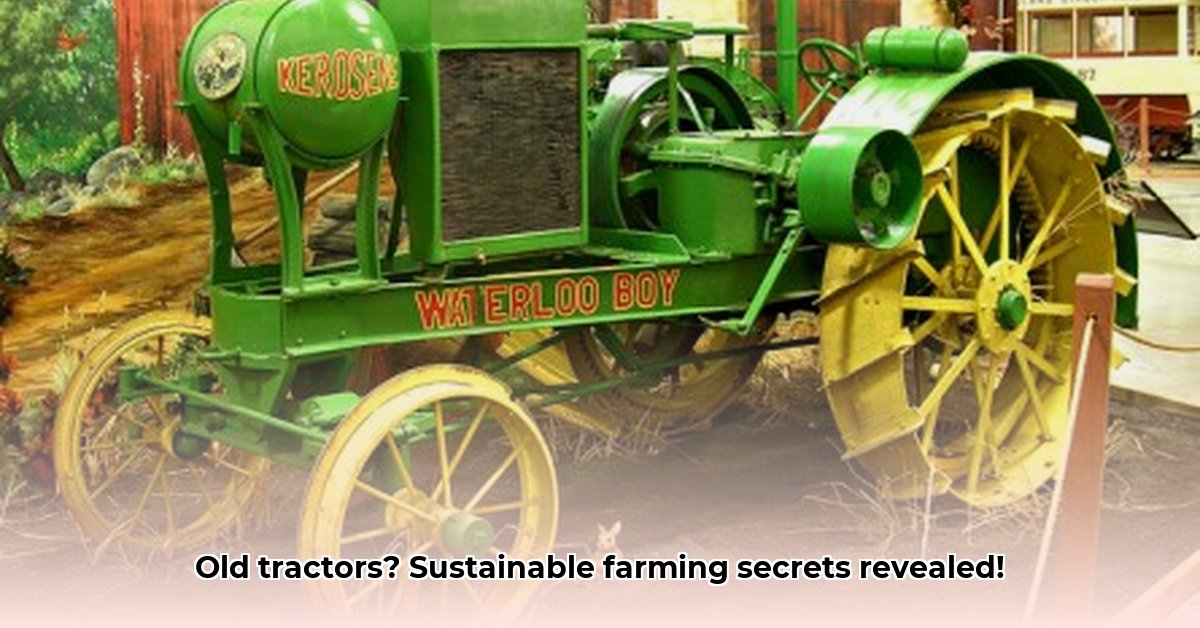
Really Old Tractors: A Sustainable Farming Revolution?
For decades, the agricultural landscape has been dominated by technologically advanced tractors. But amidst rising environmental concerns and a growing interest in sustainable practices, a surprising trend is emerging: the resurgence of classic tractors. These seemingly outdated machines, built for durability and longevity, offer a compelling alternative to their modern counterparts, promising a more sustainable path for farming. This article explores the potential of really old tractors in modern sustainable agriculture, examining their historical context, technical specifications, and the arguments for their re-integration into farming practices. For those interested in restoring vintage seats, check out these helpful resources.
A Blast from the Past: The Story of the Old Iron Horse
Imagine a time before GPS-guided implements and computerized controls. Classic tractors, often built to last a lifetime, represent an era when machines were designed for robustness and repairability. Built with simpler mechanics, these tractors were less about disposable technology and more about an investment in dependable farm equipment. Their longevity, and the inherent skills developed in maintaining and repairing them, represent a valuable asset in the quest for more sustainable agricultural practices. This simpler technology may hold the key to addressing modern environmental challenges.
Under the Hood: The Simple Genius of Old Tractor Mechanics
Unlike their modern counterparts, classic tractors feature simpler mechanical designs. This inherent simplicity translates to fewer potential points of failure, reducing downtime and maintenance costs. Many repairs can be performed on-site, minimizing the need for specialized repair shops and reducing the environmental impact associated with transportation. While sourcing replacement parts can require more effort, resourceful farmers and dedicated online communities often provide valuable support, sharing knowledge and facilitating repairs.
Old vs. New: A Sustainability Face-Off
The debate between classic and modern tractors in the context of sustainability is complex. While modern tractors boast increased fuel efficiency and advanced technology, classic tractors possess several key advantages.
Advantages of Really Old Tractors for Sustainable Farming:
- Longevity: Their robust construction leads to significantly longer lifespans, reducing the need for frequent replacements and associated environmental impact.
- Repairability: Simpler mechanics make repairs easier and potentially cheaper, minimizing waste from unnecessary parts replacements.
- Adaptability: Their design allows for easy adaptation to diverse farming practices and smaller-scale operations, making them suitable for a wider range of applications.
- Reduced Waste: These tractors, through their longevity and ease of repair, dramatically reduce waste compared to their modern counterparts.
Disadvantages of Really Old Tractors for Sustainable Farming:
- Fuel Consumption: Classic tractors generally consume more fuel than their modern counterparts, leading to higher operating costs and potentially increased greenhouse gas emissions.
- Safety Concerns: Older models often lack the advanced safety features found in modern tractors, increasing the risk for operators.
- Parts Availability: Finding original replacement parts can be challenging, potentially delaying repairs.
Putting Old Tractors to Work: Real-World Examples and Actionable Steps
The benefits of classic tractors extend beyond theoretical arguments. Farmers are already finding innovative ways to re-purpose and adapt these machines for modern sustainable practices.
Actionable Steps for Different Stakeholders:
Farmers/Owners: Assess your tractor's condition; investigate biofuel options (e.g., biodiesel); engage with online repair communities; prioritize sustainable maintenance practices; adapt farming practices to the tractor's capabilities. Explore potential niche market opportunities for products grown using these tractors (e.g., heirloom varieties).
Researchers/Engineers: Research biofuel compatibility with classic tractor engines; analyze design for improvements in efficiency and sustainability; develop strategies for improved parts sourcing; conduct life-cycle assessments comparing classic and modern tractors; develop eco-friendly upgrades.
Policy Makers: Consider policies that promote biofuel use and the restoration of classic tractors; incentivize their use for small farms; update safety regulations for classic tractors to address concerns; implement farmer support programs focusing on sustainable practices.
How to Retrofit Classic Tractors for Sustainable Farming
Retrofitting a classic tractor for sustainable farming requires a multifaceted approach. While challenges exist in terms of fuel efficiency and safety, these can be mitigated through careful planning and execution.
Step-by-Step Retrofitting Guide:
- Engine Optimization: Explore biodiesel conversion to reduce reliance on fossil fuels.
- Hydraulic System Upgrade: Modernize the hydraulics to improve efficiency and control.
- Fuel-Efficient Practices: Implement techniques like proper tire inflation and regular maintenance to maximize fuel efficiency.
- Precision Farming Integration: Consider adapting GPS guidance systems for improved accuracy and fuel conservation.
- Sustainable Parts Sourcing: Prioritize recycled or reclaimed parts to minimize environmental impact.
- Safety Enhancements: Retrofit safety features such as roll-over protection structures (ROPS) to improve operator safety.
The Future of Farming: Embracing Sustainable Solutions
The re-emergence of classic tractors in sustainable farming presents a powerful opportunity. By combining the resourcefulness of the past with the ingenuity of the present, we can create a more environmentally responsible approach to agriculture. While challenges remain, the long-term benefits of reducing waste, extending equipment lifespans, and adapting farming practices to diverse contexts make the integration of classic tractors a strategy worthy of serious consideration. Further research and collaboration are vital to unlocking the full potential of these resilient machines.